Space Art 3 - Exoplanets
They're everywhere. Since the mid-1990s astronomers have found well over 4000 so-called exoplanets - that is, planets orbiting other stars. Here are some examples of my work in this area. Enjoy!
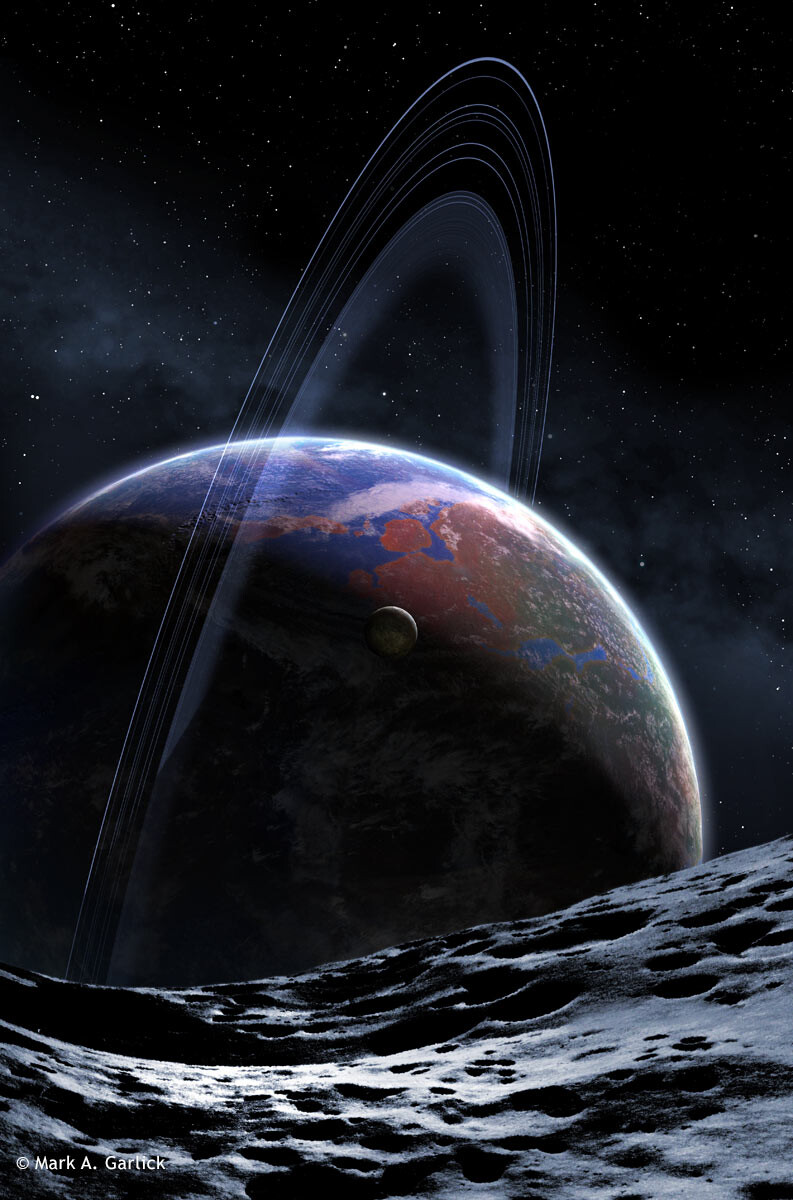
Sister Earth - an Earth-like exoplanet with a ring around it.
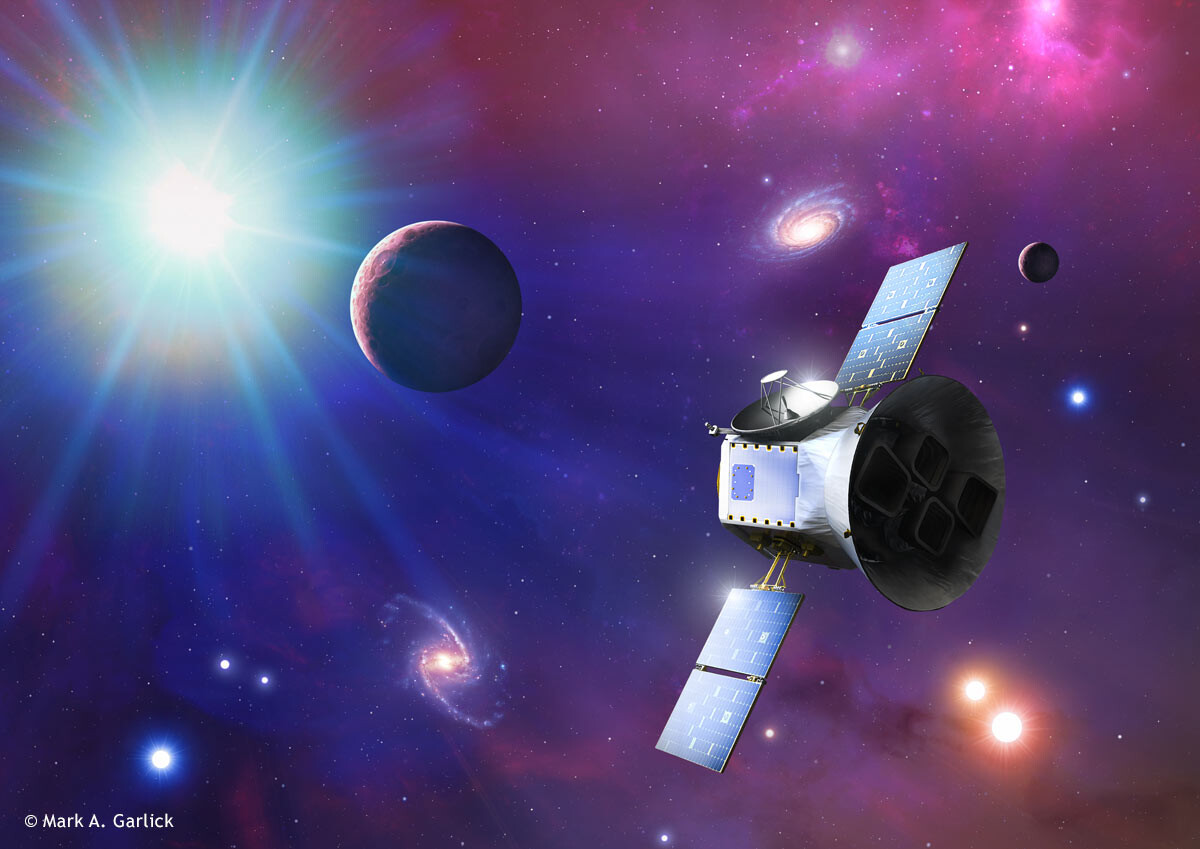
Artwork of the TESS spacecraft, which was launched by NASA for the sole purpose of finding exoplanets. It's found nearly 2000 so far.
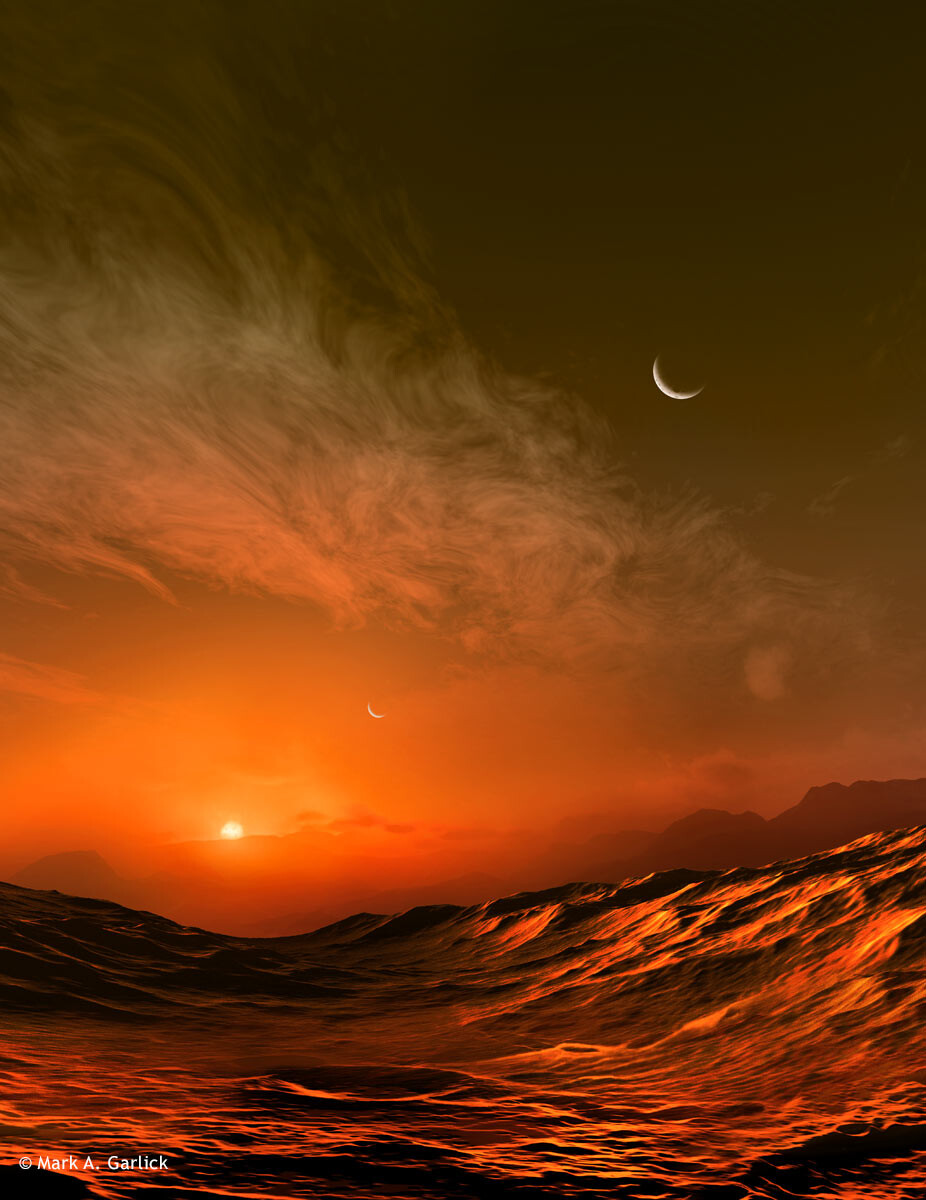
a possible view from the surface of the exoplanet detected around the red dwarf Barnard's Star
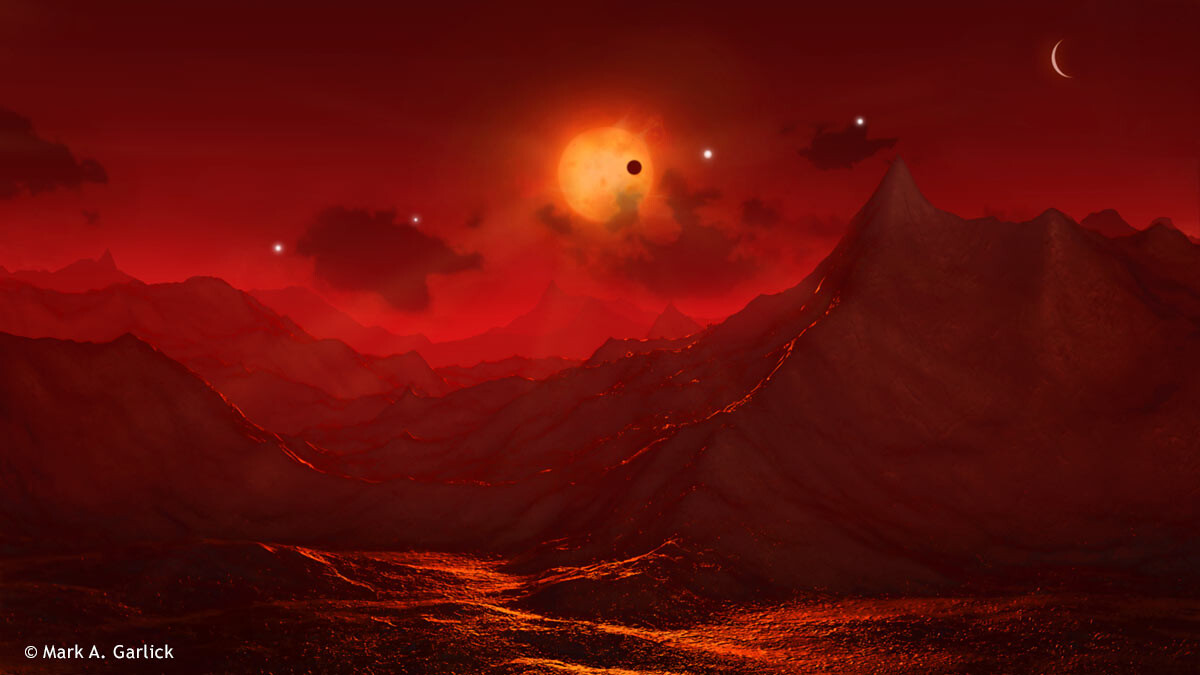
A view from the surface of one of the planets in the Trappist-1 system. This exciting system has no less than seven rocky worlds.
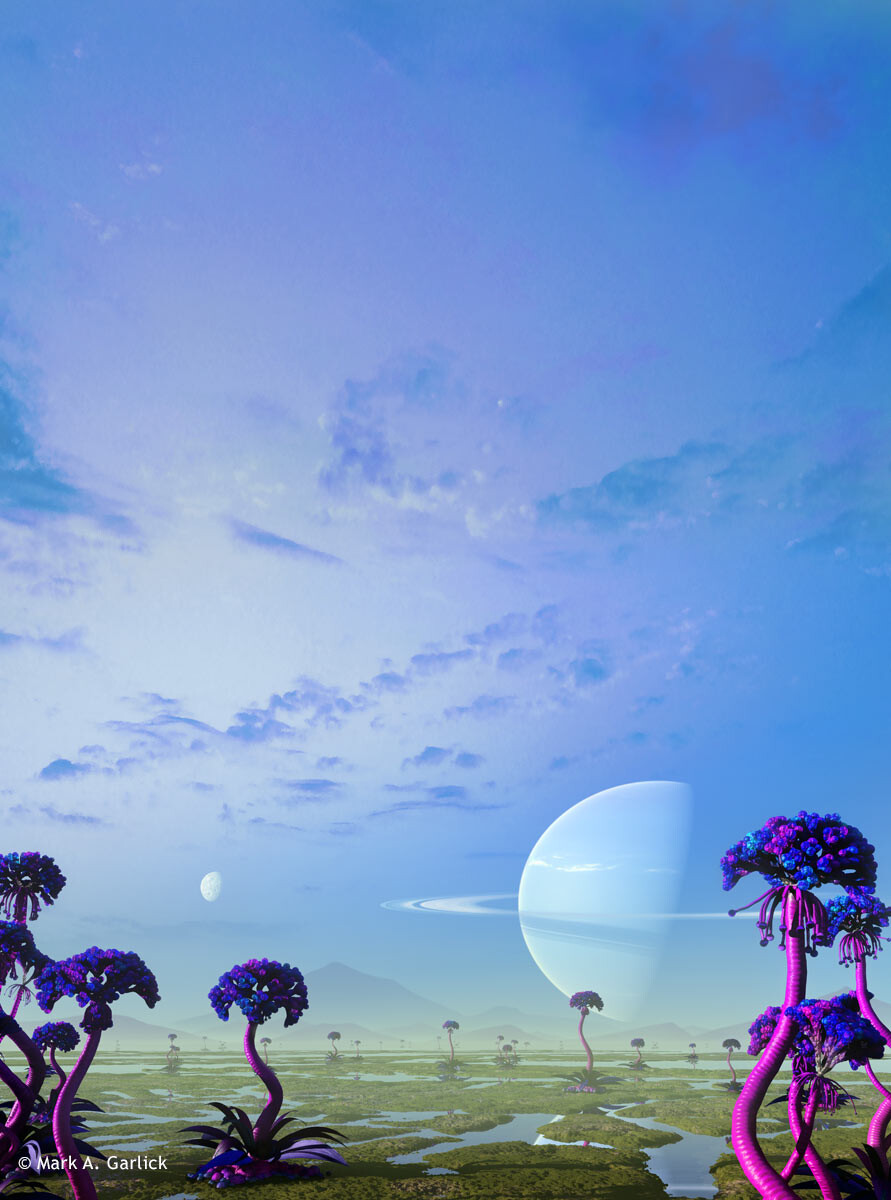
Artwork commissioned for Sky at Night showing a whimsical scene on the surface of the exoplanet 55 Cancri F.
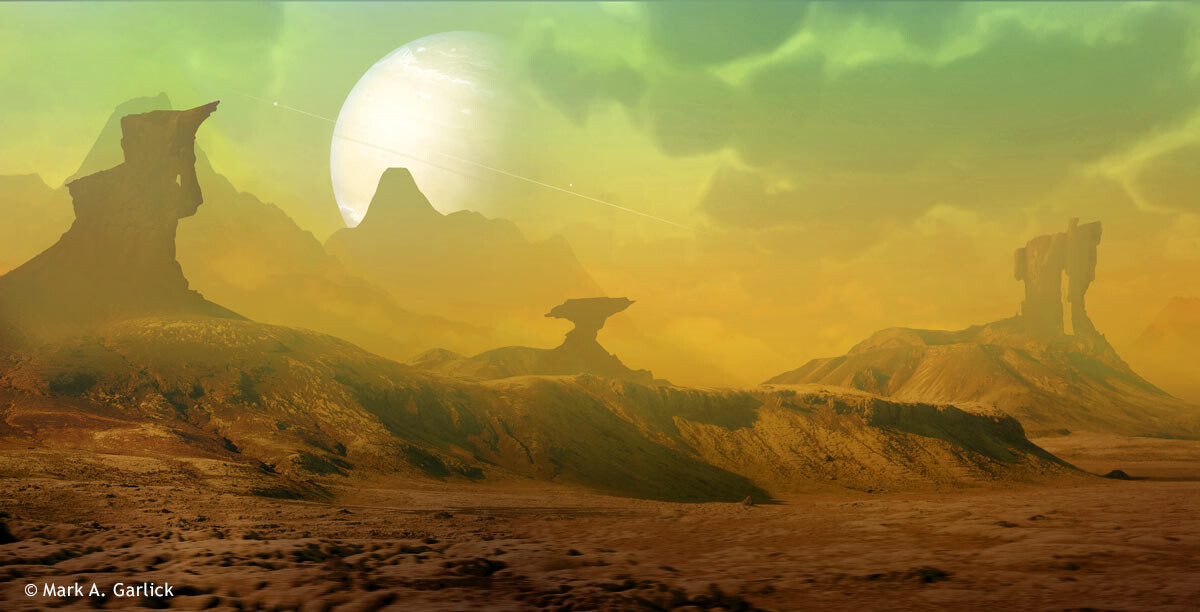
Alien planet - none in particular, just made up.

Artwork of CoRoT-7b. This is a super-Earth, discovered in 2009 orbiting the sun-like star CoRoT-7 in Monoceros. The planet orbit so closely - only 1/60th of Earth's distance from the Sun - that astronomers speculate that its surface is probably molten. It

This illustration was commissioned for a press release by Richard Parker at Sheffield University in the UK. The research, which was published in Astrophysical Journal, concluded that the chance of finding Earth-like planets in their early stages of format

Artwork of the view from an exomoon orbiting a ringed exoplanet in a polar orbit. The exomoon is depicted as rocky, with large stalagmite-type formations on its surface. Its parent is a gas giant with a series of bright rings, similar to Saturn's.
Aurora on Proxima Centauri B - animation done in 3DS Max
Trappist-1 is a red-dwarf star – the most common variety – located some 40 light-years away in Aquarius. In 2015, astronomers discovered that Trappist-1 was host to three earth-sized planets. Then it came under the spotlight again in 2017 when NASA scient